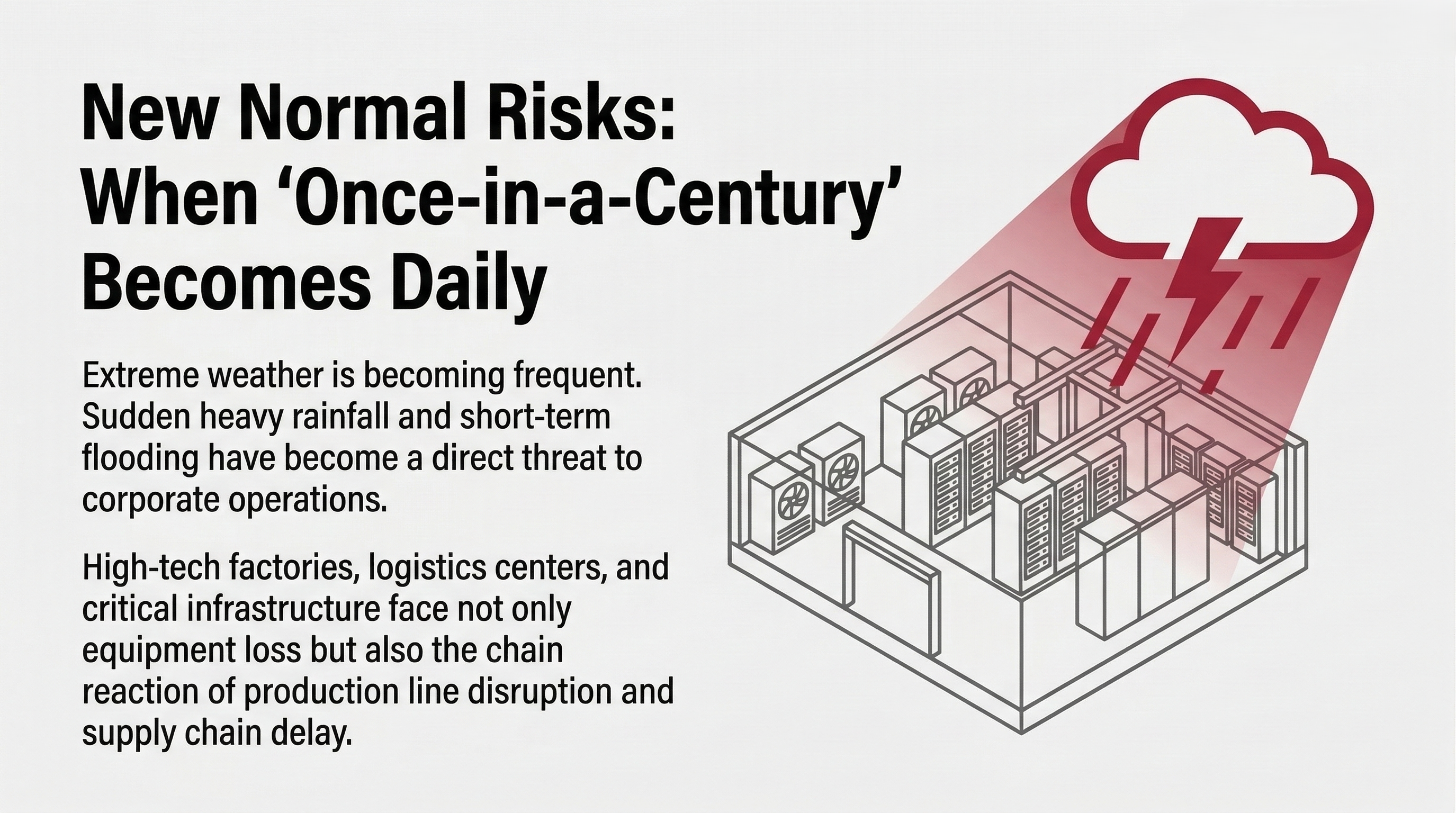
Climate change is becoming increasingly severe, leading to frequent extreme weather events. Sudden torrential rains and short-term flash floods are no longer “once-in-a-century” occurrences but have become a daily operational risk that enterprises must confront. For high-tech plants, logistics centers, data centers, and critical infrastructure, the losses caused by flooding extend far beyond equipment damage; they trigger chain reactions including production line shutdowns, order delays, and insurance claim disputes. Under this trend, the market has begun to re-examine a previously overlooked question: Can flood control equipment truly be deployed successfully at the “most critical moment”? This is not just an evolution of engineering technology, but a shift in decision-making logic and economic rationality.
From Engineering Specifications to Decision Economics
For a long time, the flood gate market has used “structural strength,” “material thickness,” and “pressure resistance data” as the primary benchmarks for comparison. However, practical experience shows that what determines the success or failure of flood protection is often not the parameters on the blueprint, but rather deployment speed, manpower requirements, and on-site execution capability.
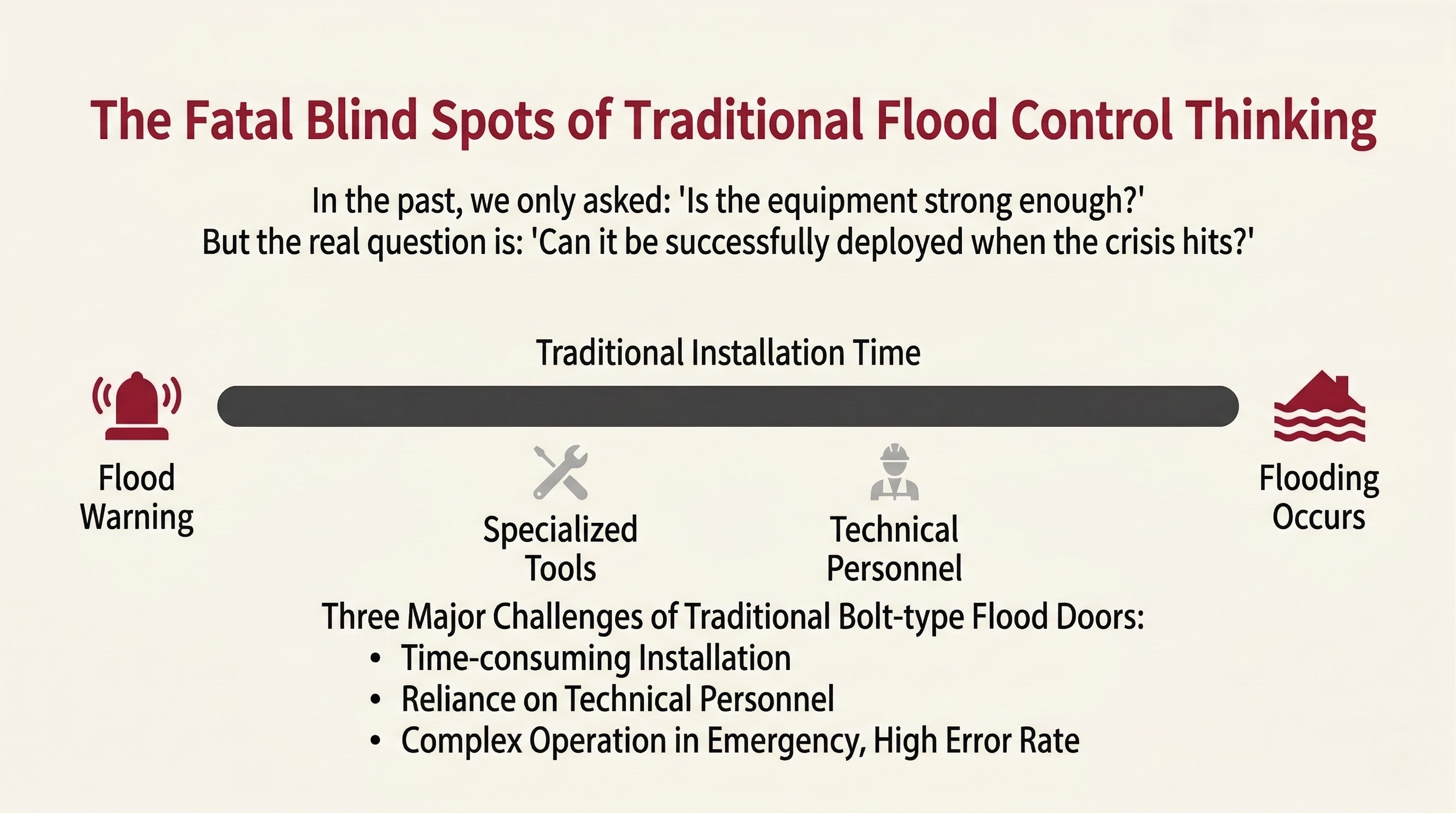
Industry experts point out that while traditional bolt-fixed flood gates meet regulatory standards, they face three major challenges during actual disasters:
- Excessively long installation times.
- Heavy reliance on professional installers.
- High susceptibility to human error due to complex operations under emergency pressure.
This has prompted a shift in flood engineering philosophy from an “engineering arms race” toward “Executable Economics,” which is more grounded in reality.
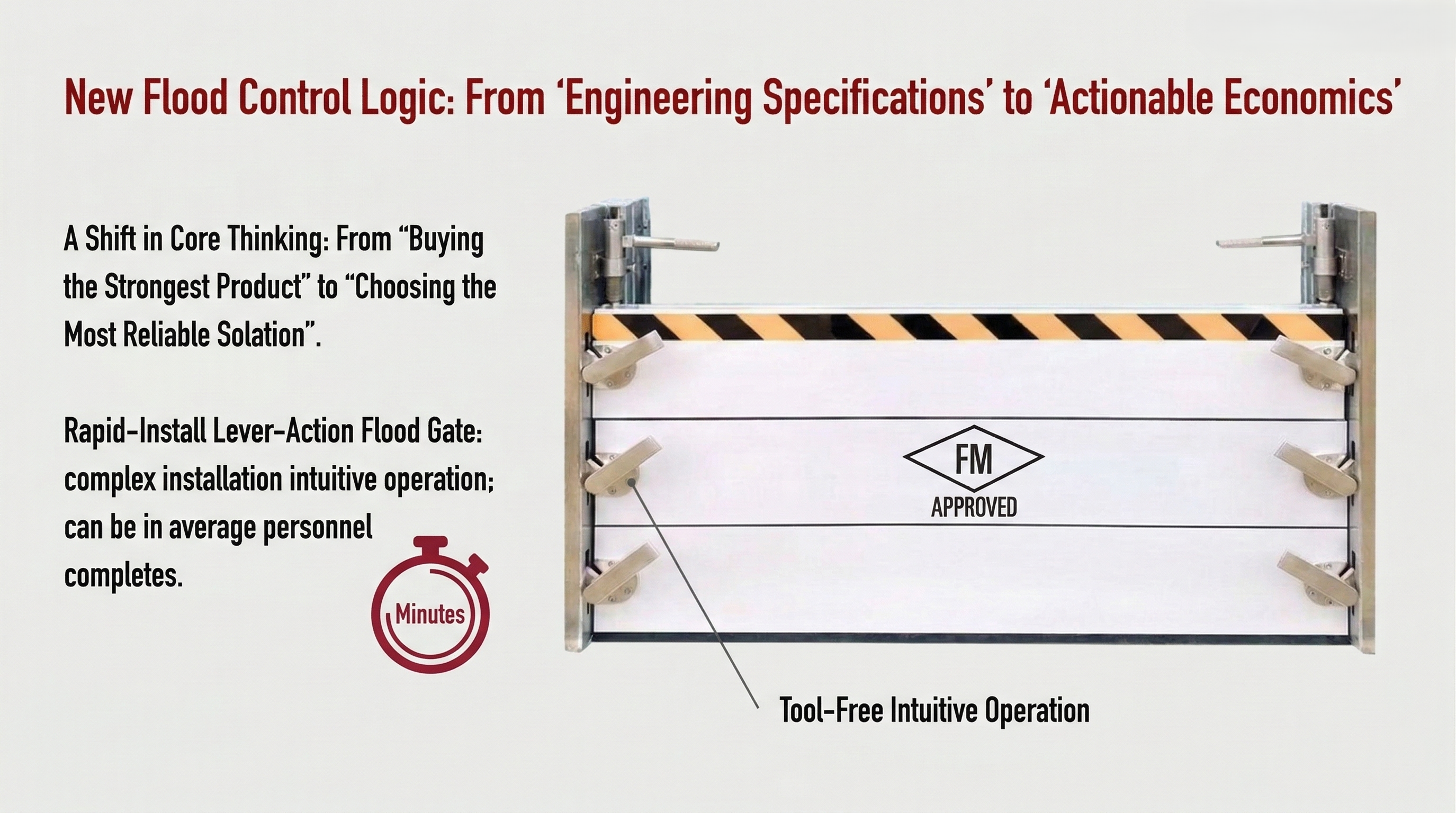
Quick-fit Buckled Flood Door: Designed for Uncertainty
Liansuo Building Technology (聯索建築科技), a company specializing in high-risk protection engineering, notes that the core consideration for corporate investment in flood control should shift from “buying the strongest product” to “choosing the solution least likely to fail.”
The Quick-fit Buckled Flood Door promoted by Liansuo is developed based on this logic. The design does not merely reinforce metal structures; it fundamentally simplifies the deployment process. It transforms construction tasks that previously required specialized tools and technical skills into intuitive operations that can be completed by general security or logistics personnel within minutes.
Industry analysis suggests that the economic value created by this design lies not in the materials themselves, but in providing highly certain protection results under conditions of extreme time scarcity and high manpower uncertainty.
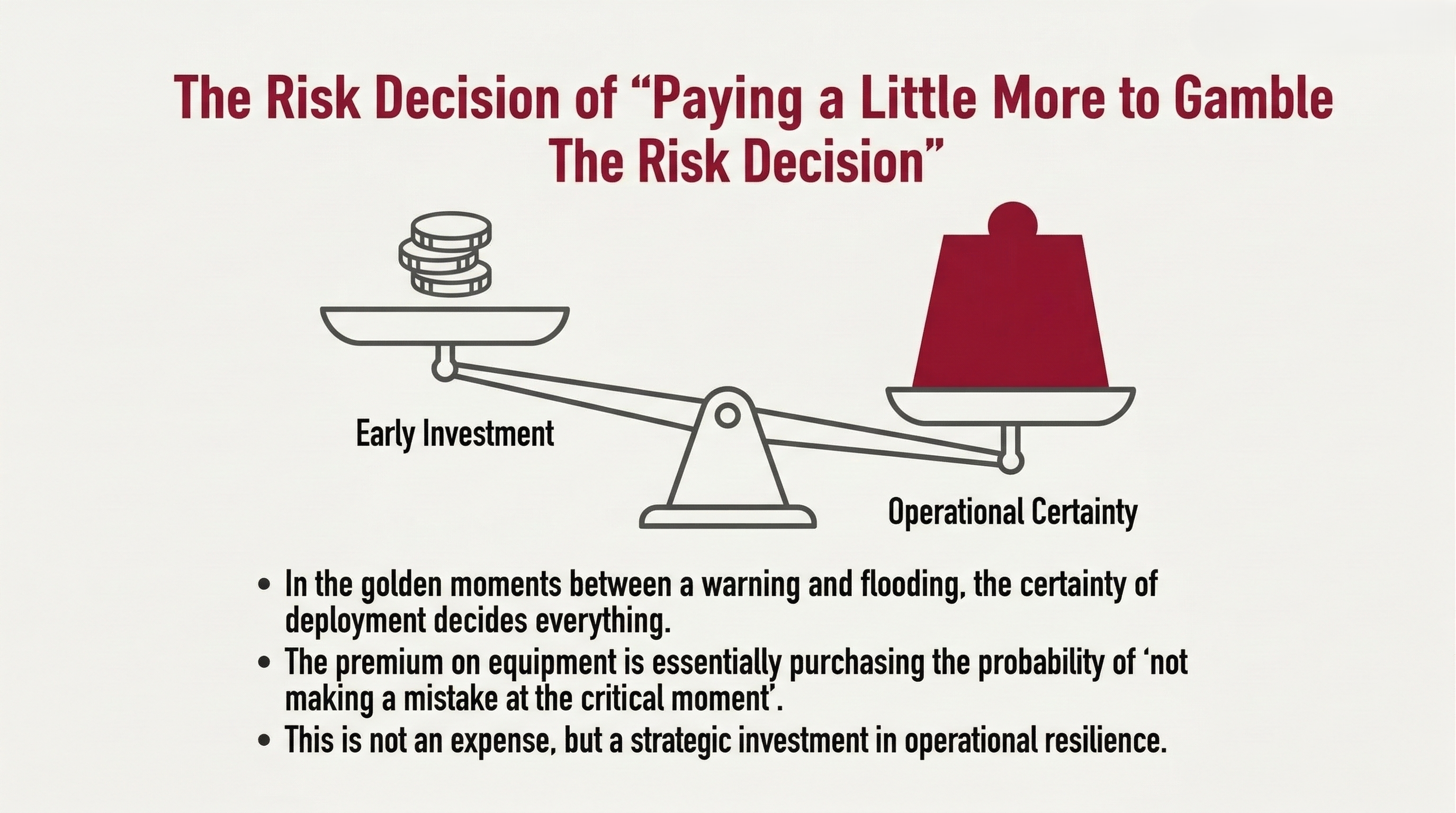
“Paying a Little More to Gamble a Little Less”
There are often only dozens of minutes between a flood warning and actual inundation. During this window, any deployment delay or human error can lead to irreversible losses. Consequently, more companies are accepting a new risk management concept: the premium paid for flood equipment is actually a purchase of the “probability of zero failure at the critical moment.”
Liansuo Building Technology observes that clients of Quick-fit Buckled Flood Doors are mostly highly risk-averse decision-makers. They would rather invest more in upfront costs than gamble on whether deployment can be successfully completed at the final moment before a disaster strikes.
Reshaping Market Segregation, Not Replacing All Solutions
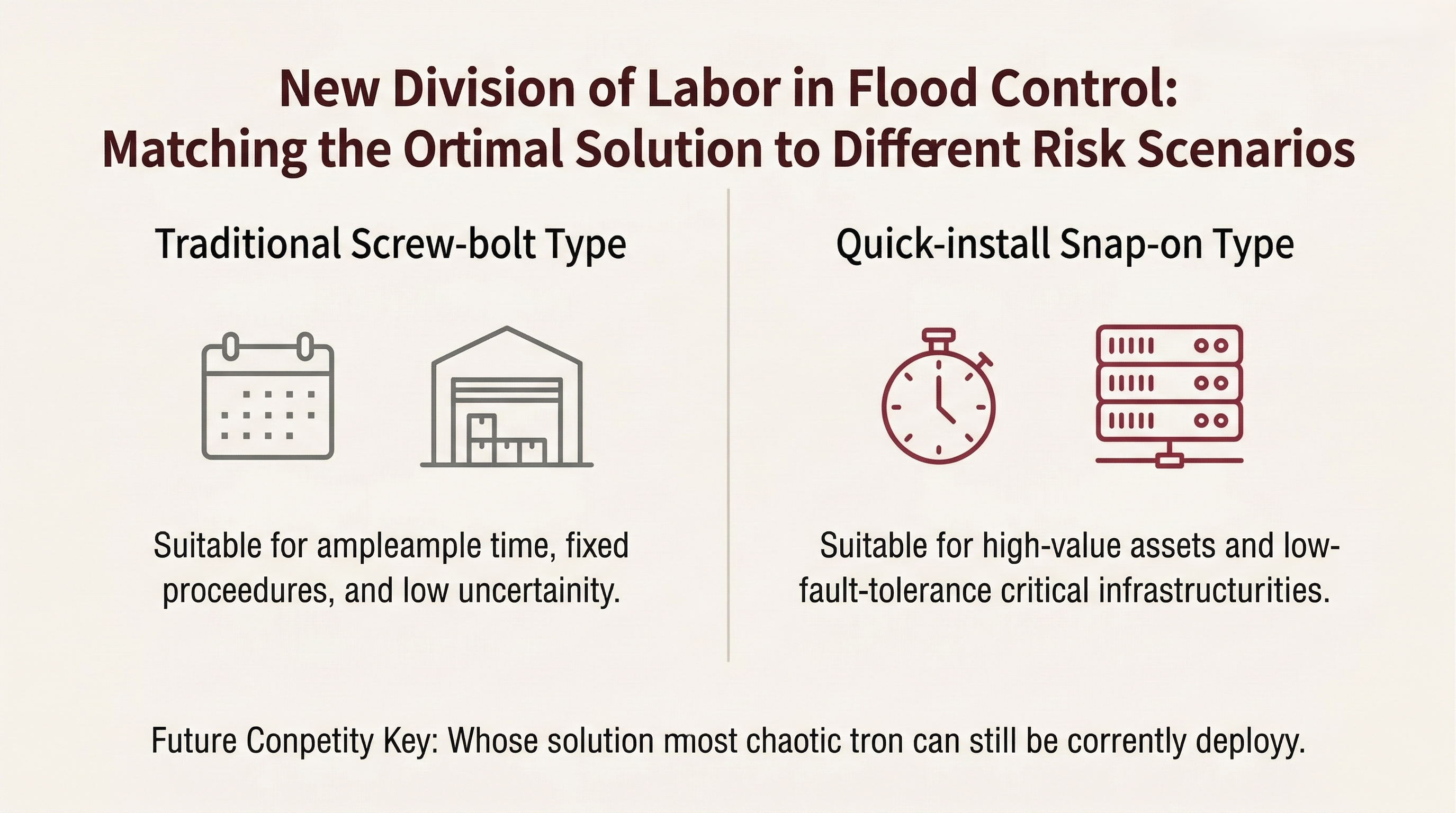
It is worth noting that Quick-fit Buckled Flood Doors are not intended to completely replace traditional products. The industry generally believes that the two serve different risk scenarios:
- Traditional Bolt-type Gates: Suitable for low-uncertainty environments with ample time and fixed procedures.
- Quick-fit Buckled Flood Door: More suitable for high-value assets and critical facilities with a low tolerance for error.
This market segregation not only allows enterprises to choose based on their own risk profiles but also contributes to a more effective allocation of disaster prevention resources across society.
From Engineering Products to Risk Decision Tools
As extreme weather becomes the new normal, flood control equipment is no longer just an engineering accessory but has evolved into a component of corporate operational risk management. Liansuo Building Technology states that the key to future competition in protection systems will no longer be “whose product is stronger,” but “whose solution can still be used correctly by people in the midst of chaotic reality.”