Semiconductor wafer fabrication plants (Fabs) are among the most capital-intensive and precision-driven industrial facilities. Even a minor fire incident can cause business interruption (BI), leading to physical asset loss, production line stoppage, and supply chain disruptions, potentially escalating to the Maximum Foreseeable Loss (MFL). This article provides an in-depth analysis of the core value of firestop systems in semiconductor plants from the perspectives of insurance and risk management. It also details how Liansuo Construction Technology offers ILAC MRA internationally recognized firestop compliance inspection and remediation verification services, protecting core corporate assets and ensuring uninterrupted operations.
Authoritative Qualifications and International Recognition: Liansuo as an Inspection Body
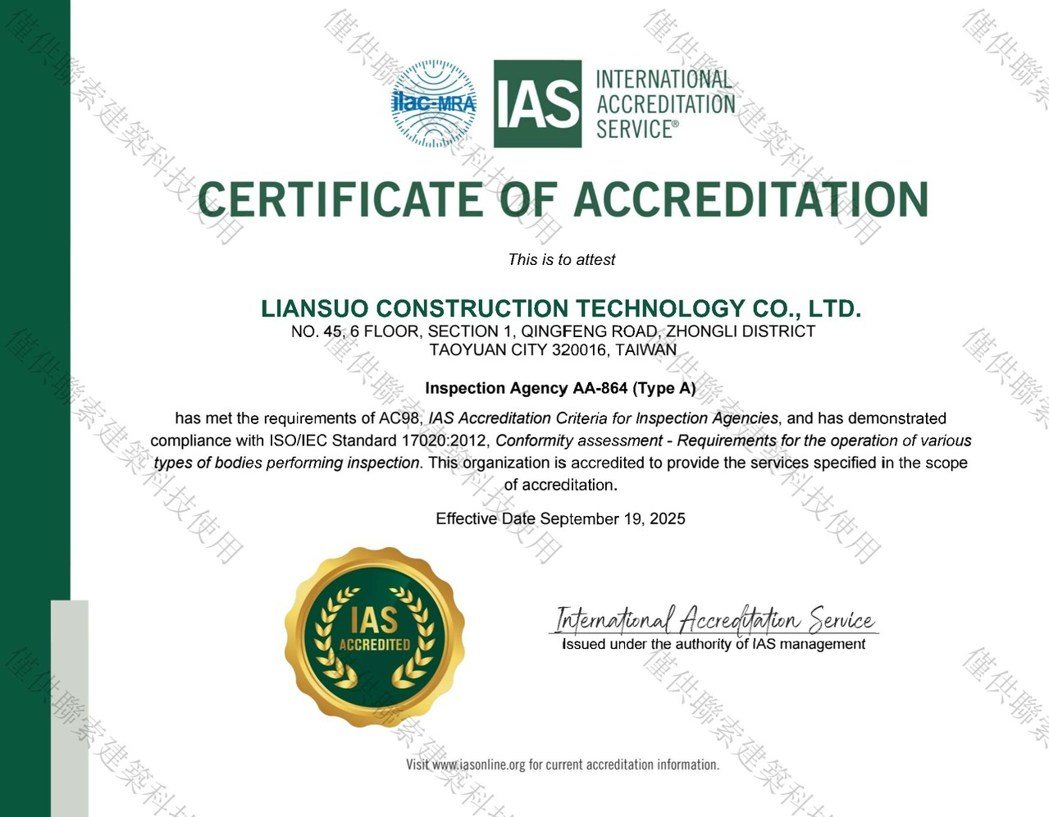
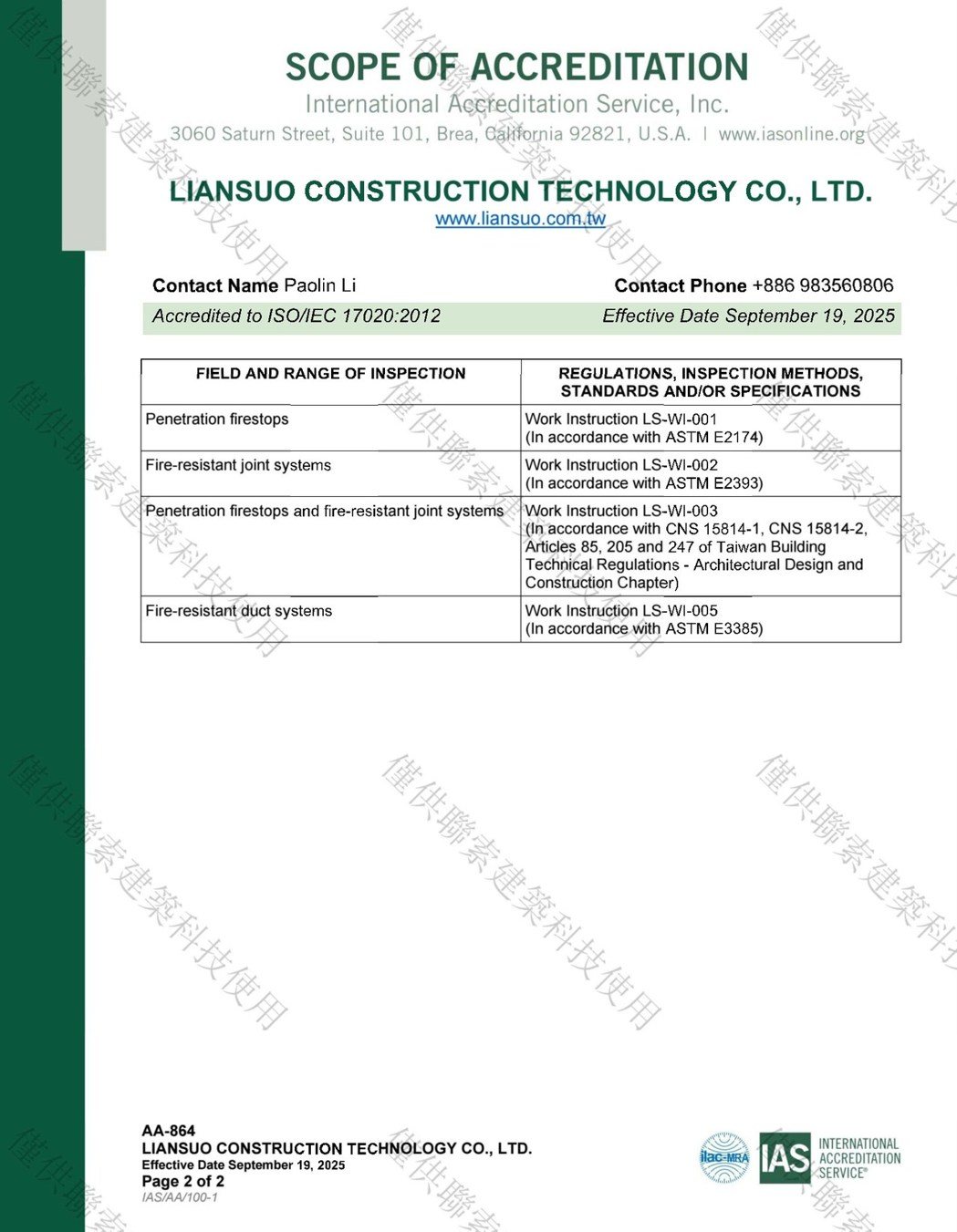
- Inspection Body Qualification: Liansuo Construction Technology Co., Ltd. is an inspection body compliant with ISO/IEC 17020.
- Accreditation / Mutual Recognition System: Accredited by the International Accreditation Service (IAS) and included in the ILAC MRA international mutual recognition system; its inspection reports and data hold international credibility and traceability, facilitating insurance underwriting as well as acceptance by multinational clients and regulatory authorities.
- Terminology Clarification: Accreditation differs from certification. Liansuo holds “accreditation” as an inspection body, proving its technical competence and impartiality.
Core Insurance Concerns and Risk Model
- Compartmentation Integrity: Cable trays, process/air-conditioning ducts, busway penetrations are rapid conduits for fire and smoke spread. Failure of firestopping compromises compartmentation, facilitating fire spread across zones, quickly overloading water/gas suppression systems and emergency resources, greatly increasing the Maximum Foreseeable Loss (MFL).
- Business Continuity (BCP): Effective firestopping protects cleanrooms and critical equipment zones, limits loss scope, shortens Mean Time to Repair (MTTR), and reduces the duration and severity of BI/CBI (Contingent Business Interruption).
- Compliance & Claims Preconditions: Insurance contracts and underwriting usually require ongoing compliance with CNS standards, ASTM E2174/E2393, FM data sheets/standards, and FM Approvals. Lack of accredited third-party compliance inspection and documentation directly affects the certainty and timeliness of claim settlements post-incident.
- Insurability & Pricing: Firestop management levels impact underwriting conditions, coverage limits, deductibles, and premiums. Higher risk control standards can secure more favorable insurance terms and lower capital costs.
Risk Economics: High Return on Investment
- Potential Loss: Asset damage plus BI may reach hundreds of millions to billions in local currency, with long-term impacts on orders and market share.
- Inspection Investment: Represents a very small fraction of overall risk exposure yet is a highly effective measure to reduce MFL and insurance premiums.
- Governance Principle: Following ALARP (As Low As Reasonably Practicable) to reduce risks to a reasonably practicable minimum level.
Implementing a Closed-Loop Management System (From “Visible” to “Auditable”)
- Sampling and Verification: Conduct destructive or non-destructive sampling inspections per ASTM E2174/E2393 standards; quantitatively record and image materials, thickness, density, and installation details.
- Defect Remediation: Establish a closed loop of “issue list — remediation measures — re-inspection records” to ensure all evidence is retained with clear accountability tracing.
- Periodic Review: Incorporate firestopping into annual risk assessments or internal audits and coordinate control with hot work, renovations, and MEP equipment upgrades.
Liansuo’s Value Proposition (Aligned with Insurance and Audit Needs)
- Standard Expertise: Proficient in major standards such as FM, ASTM, UL, CNS, with deep understanding of insurance risk control and underwriting terminology.
- Accredited Third-Party Verification: As an IAS/ILAC mutual recognition accredited inspection body, provides inspection reports and evidence chains usable for underwriting and compliance audits, enhancing claim certainty and efficiency.
- System Building: Transforms firestop defect corrections from isolated fixes into institutionalized, ledger-based management, making firestopping a continuously controllable risk factor.