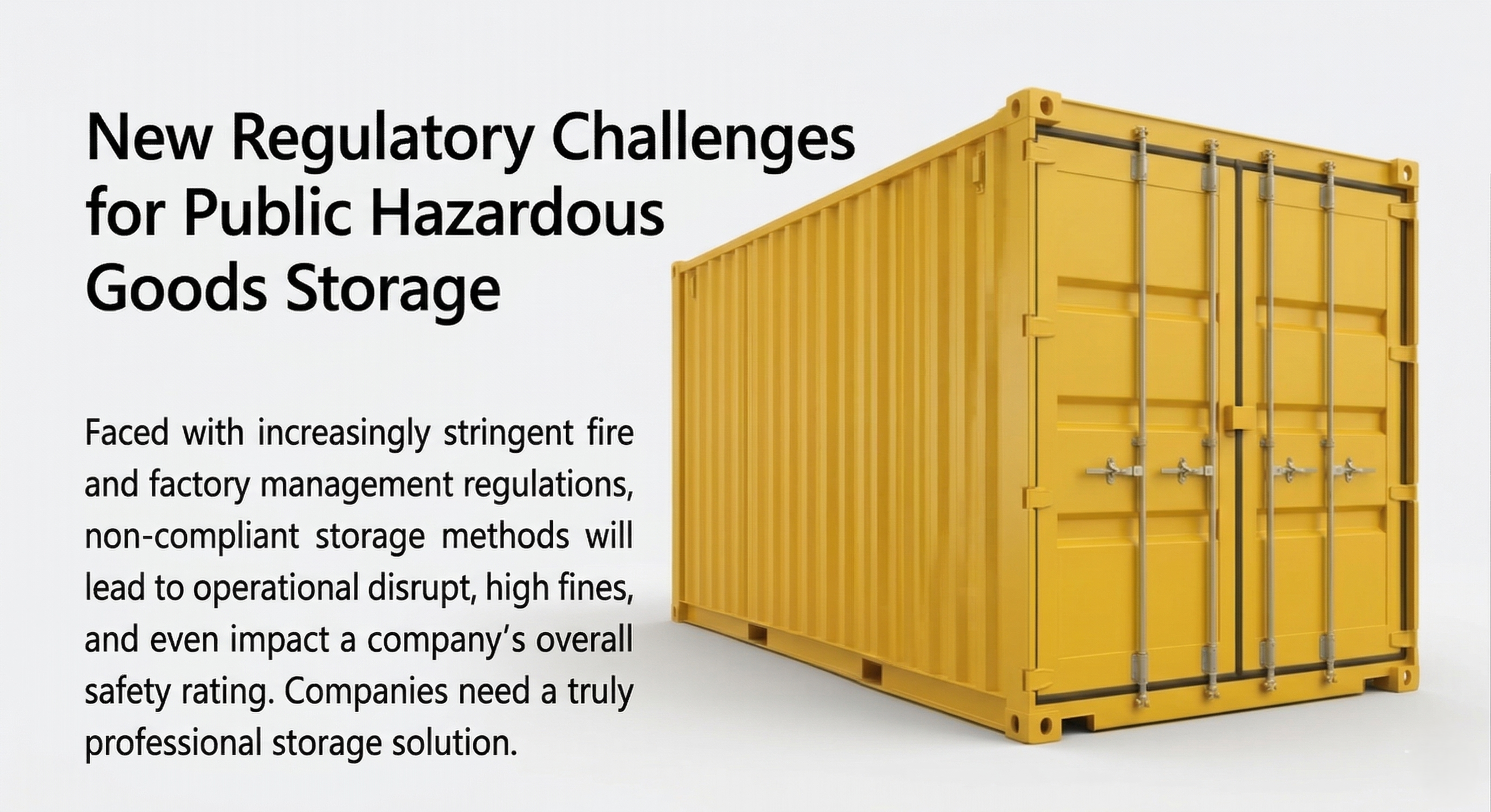
In Taiwan, the storage and management of chemicals and flammable gases is subject to increasingly stringent fire safety and factory management requirements. Inadequate storage planning can lead to operational disruptions, regulatory penalties, and broader impacts on a company’s overall safety management assessment. Against this backdrop, what enterprises need is no longer simply “a space to place containers,” but a professional storage solution built on clear safety logic and fully aligned with regulatory requirements.
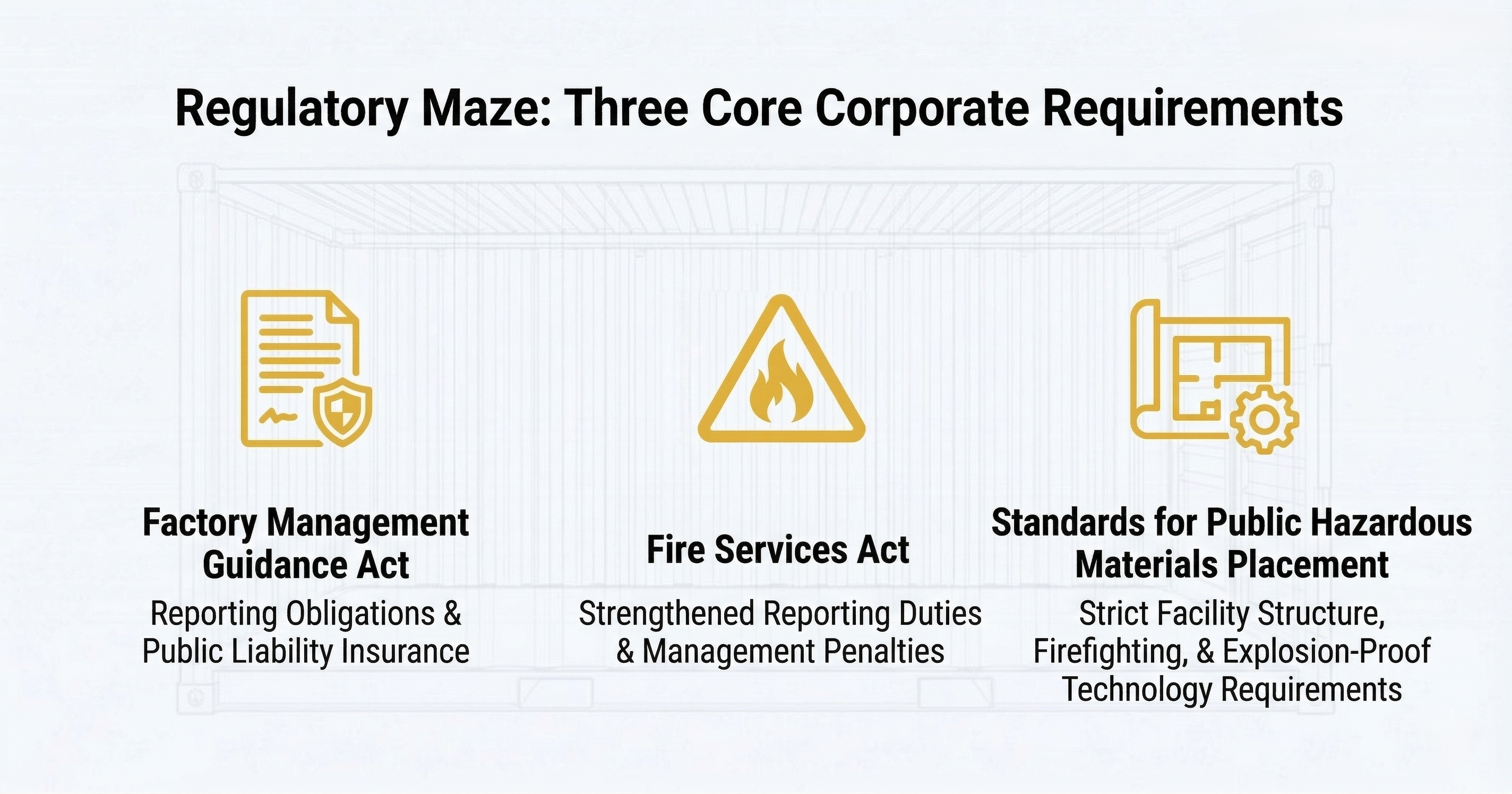
The Regulatory Maze: Three Core Requirements Every Business Must Understand
Current Taiwanese regulations governing the storage of public hazardous materials and flammable gases primarily involve the following three regulatory frameworks:
- Factory Management Guidance Act
When the stored quantity of hazardous materials reaches the regulated threshold, operators are legally required to report to the competent authority and obtain public liability insurance, ensuring adequate compensation capacity in the event of an incident. - Fire Services Act and Related Amendments
The Fire Services Act has explicitly strengthened corporate responsibility for the reporting and management of public hazardous materials. Non-compliance may result in substantial fines; in serious cases, criminal liability may also apply. - Standards for the Establishment of Sites for the Manufacturing, Storage, and Handling of Public Hazardous Materials and Flammable High-Pressure Gases
These establishment standards set out specific technical requirements for storage facility construction, fire resistance performance, safety distances, and necessary explosion protection or pressure relief measures. They also serve as the key reference for fire safety reviews and on-site inspections.
Supplementary Note: Current regulations have yet to establish a unified application model for “container-type storage facilities.” Related proposals are typically reviewed and confirmed by clients and local government authorities on a project-by-project basis.
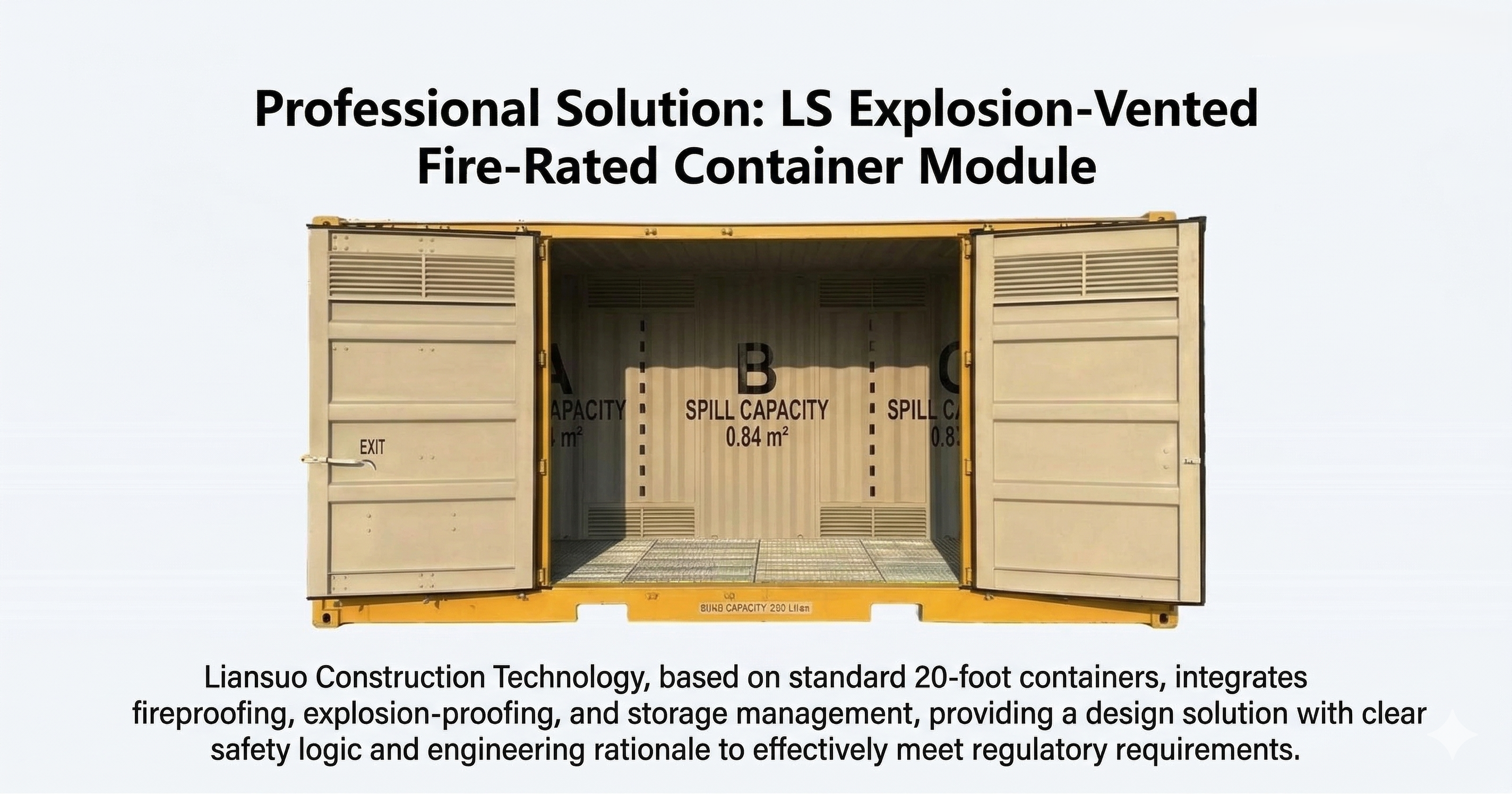
Lianso’s Solution: Safety-Goal-Oriented Container Storage Design
In response to the above regulatory requirements, Lianso Architecture Technology introduces the LS Explosion-Venting Fire-Resistant Container Unit as a core safety-focused storage solution for public hazardous materials.
This solution uses a standard 20-foot steel container as its structural foundation, integrating fire compartmentation, explosion venting and pressure relief, and storage management requirements — providing businesses with an engineered, technically defensible storage design option at the planning stage.
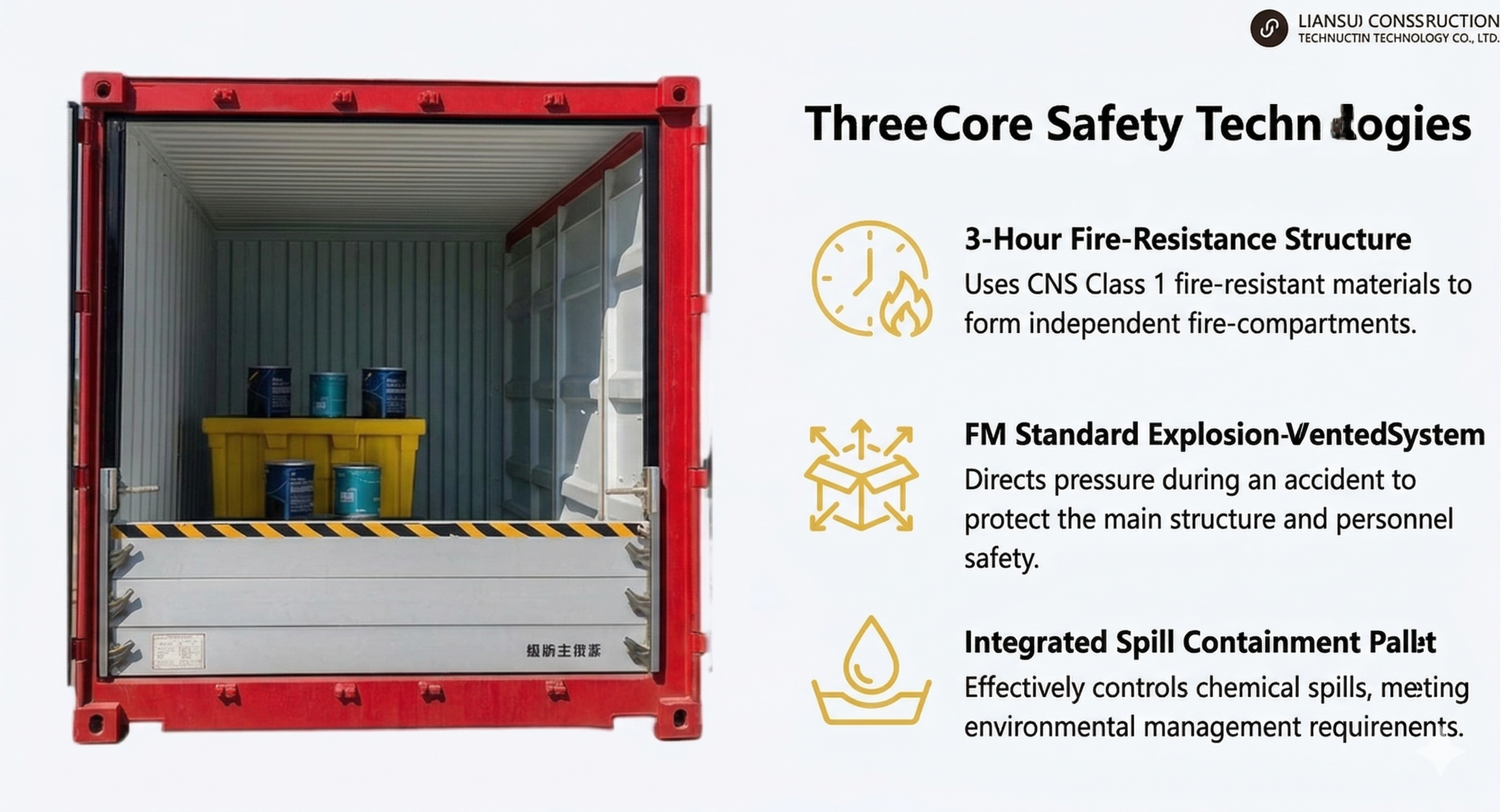
Core Technical Design Features
Fire and Explosion-Resistant Structure
Container walls and ceilings are constructed using CNS Class 1 non-combustible materials, with a designed fire resistance rating of up to 3 hours, complemented by a Type 120B fire- and explosion-resistant door (designed fire resistance of 2 hours or more), forming a clearly defined fire-compartmented zone.
The explosion venting system follows the design principles of FM Data Sheet 1-44, incorporating the LS-EV01 Explosion Vent Screw (FM Certified) and the LS-JS900 Traction Cable (CNS Tested). In the event of an internal deflagration, the pressure relief mechanism reduces structural loading and limits projectile travel distance of structural components.
Storage and Management Configuration
- Effective internal volume: approximately 29 m³; maximum allowable load: approximately 26 tonnes
- An integrated sump structure is provided inside the container to prevent liquid chemical spills from spreading, facilitating on-site management and environmental control
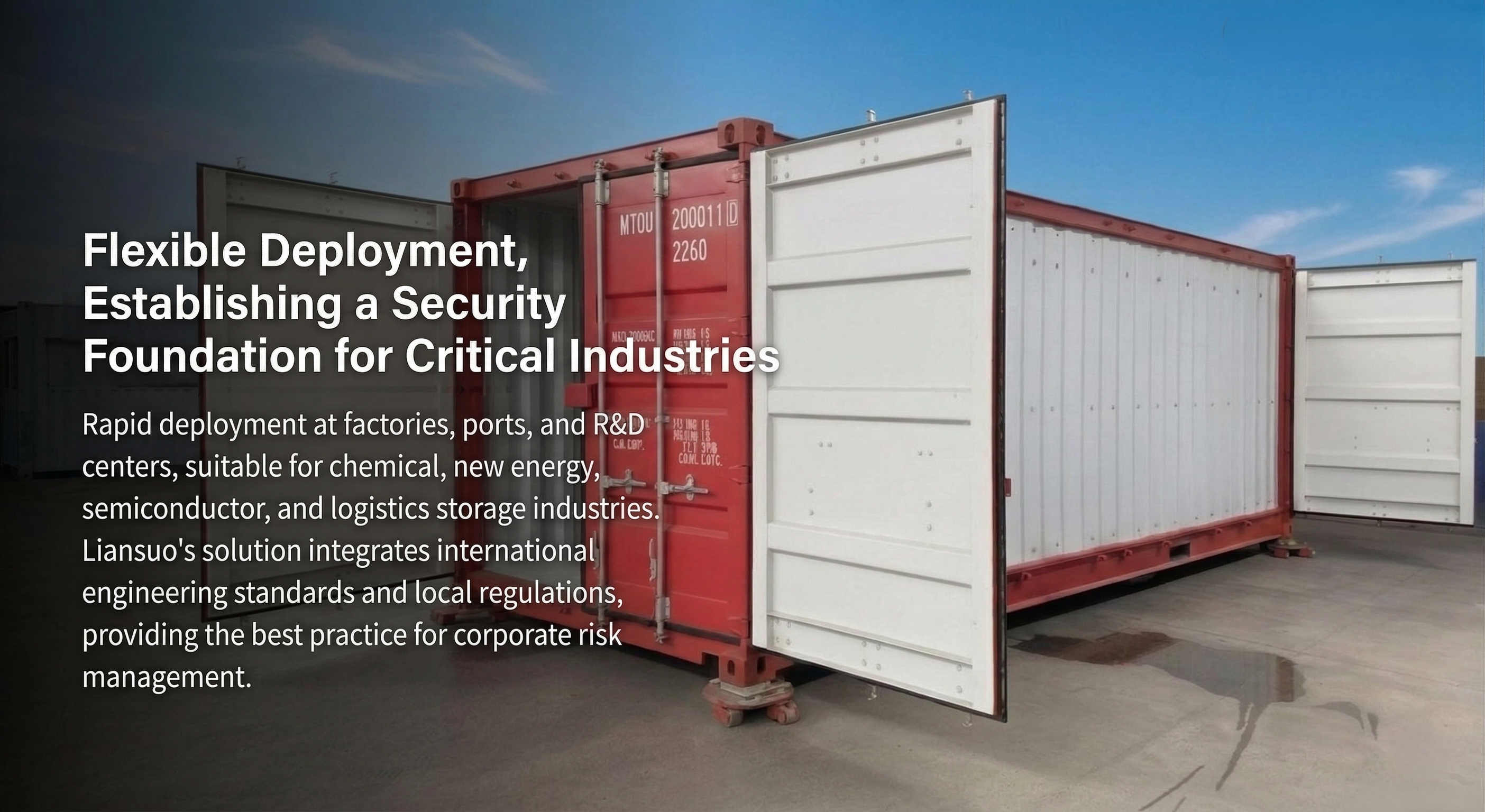
Flexible Deployment
The modular design enables rapid deployment in factory, port, or laboratory settings, with multi-unit configurations available to establish a hazardous materials storage zone with zoned management capability.
Applicable Use Cases
- Chemical plants and new energy lithium battery R&D centers
- Hazardous materials zoned storage in logistics and warehousing parks
- Temporary chemical storage at ports and transit terminals
- Process chemical or gas storage for semiconductor and precision electronics industries
Closing Remarks
In an environment of tightening regulatory requirements, storage designs grounded in clear engineering logic and safety-oriented objectives have become an essential component of enterprise risk management. Lianso Architecture Technology integrates the spirit of local regulations with international fire protection and explosion prevention engineering expertise, helping businesses establish more feasible and professionally credible public hazardous materials storage solutions.